
- Acoustic Fabric Panels
- Acoustic Felt Panels
- Acoustic Wood Panels
- Acoustic Curtains
- Acoustic Projects
- About Us
- Our Clients
- Contact
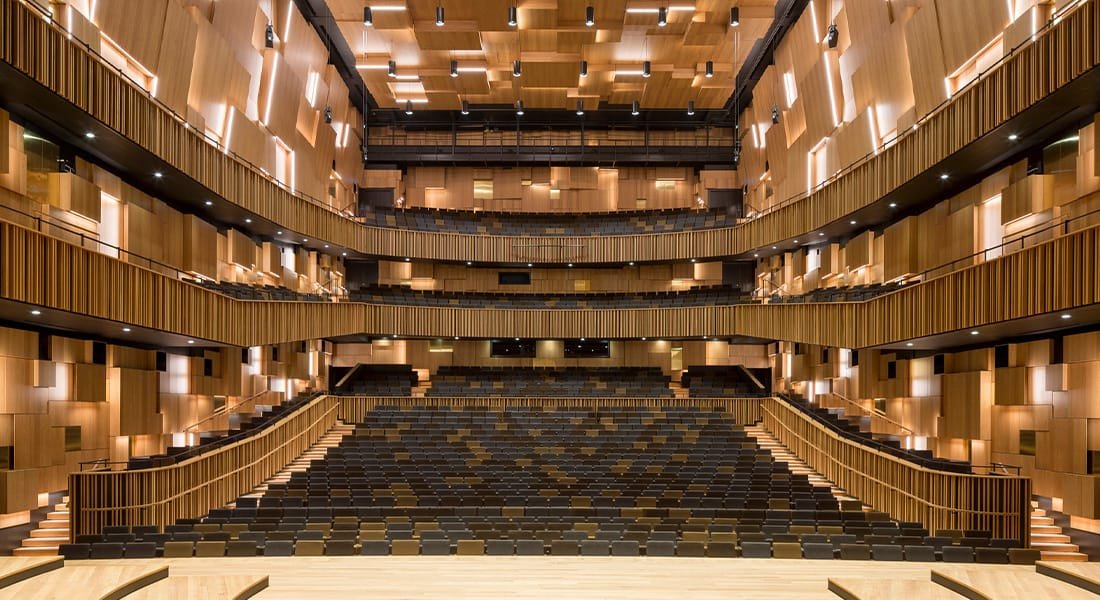
Conference Room Acoustics
Conference rooms are spaces where information is shared, ideas are exchanged, and interaction is key. But for communication to be effective, visual and technological equipment alone is not enough. Proper acoustic design plays a crucial role in ensuring that speech is delivered clearly and without distraction. A well-balanced acoustic environment helps participants stay focused and ensures that every word is heard as intended.
Why Are Acoustics Important in Conference Rooms?
- Speech clarity: Echoes, background noise, or sound dispersion can make it difficult to understand speakers.
- Participant comfort: Poor acoustics can cause listening fatigue and loss of concentration.
- Even sound distribution: Ensures that all attendees, regardless of where they sit, experience the same sound quality.
- Privacy and confidentiality: Especially important during sensitive meetings or presentations.
Common Acoustic Issues and Solutions
- Reverberation
- Issue: Sound reflects off hard surfaces, creating a blurred or muddy audio experience.
Solution: Install acoustic wall panels, fabric-covered absorbers, or suspended ceiling systems to reduce reflections. - External Noise Intrusion
- Issue: Sounds from outside the room disrupt focus inside.
Solution: Use acoustic doors, double-glazed windows, and insulated wall systems to block noise intrusion. - Uneven Sound Distribution
- Issue: Some areas receive too much sound, while others hear too little.
Solution: Apply acoustic diffusers to distribute sound evenly. Coordinate speaker placement with acoustic planning.
Acoustic Treatment Products
- Acoustic wall and ceiling panels: Control reverberation and improve sound quality
- Acoustic ceiling systems: Reduce overall echo in large spaces
- Sound-insulated doors and glazing: Block external noise
- Acoustic flooring materials: Prevent sound reflection from floors
- Acoustic curtains: Provide flexible sound control and privacy
- Diffusers and bass traps: Balance sound reflections and reduce frequency build-up
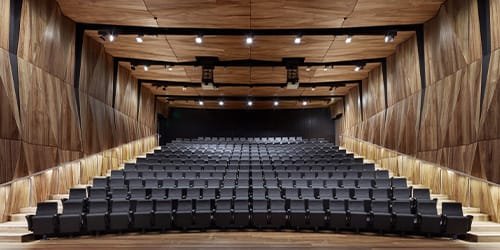
Key Considerations in Acoustic Design
- Consider room size, ceiling height, and surface materials
- Define the room’s primary use (presentations, panels, video conferencing, etc.)
- Plan audio systems alongside acoustic treatments
- Use fire-retardant, code-compliant materials
- Integrate acoustic elements into the architectural and interior design
Frequently Asked Questions (FAQ)
Why does echo occur in conference rooms?
Echo usually results from sound bouncing off hard, flat surfaces. It can be minimized with properly placed acoustic materials.
How effective are acoustic panels?
High-quality panels, correctly installed, can reduce echo by up to 70% and significantly enhance speech clarity.
Should I prioritize sound insulation or acoustic treatment?
Both are important. Sound insulation keeps external noise out, while acoustic treatment improves sound quality inside the room.
Do acoustic treatments affect interior design?
No. Modern acoustic products come in a variety of colors, textures, and designs that blend seamlessly into the space.
Contact Us
- Project: +90 505 017 35 69
- export@hanacoustic.com
- Yavuz Selim Mah. Akcay k. No:11/A Sultaneyli /ITANBUL TURKEY