
- Acoustic Fabric Panels
- Acoustic Felt Panels
- Acoustic Wood Panels
- Acoustic Curtains
- Acoustic Projects
- About Us
- Our Clients
- Contact
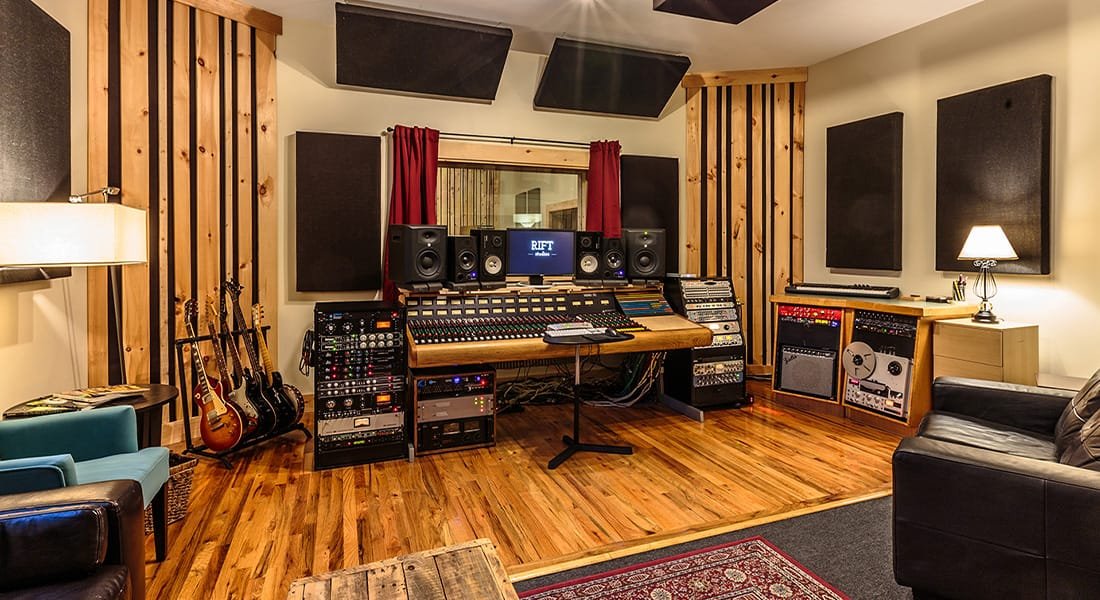
Control Room Acoustics
Control rooms are the heart of audio, broadcast, and recording studios. For sound engineers and technicians, accurate sound monitoring and minimal acoustic distortion are essential. Proper acoustic treatment in control rooms ensures clear sound perception, precise audio production, and a comfortable working environment.
Importance of Control Room Acoustics
Even minor acoustic problems in a control room can negatively affect sound perception and lead to incorrect mixing and mastering decisions. Effective acoustic design provides:
- Clear, accurate, and natural sound
- Balanced frequency response
- Minimal sound reflections and echoes
- Prevention of external noise intrusion
- Comfortable environment for long working hours
Common Acoustic Challenges in Control Rooms
- Early reflections: Sound waves bouncing off walls and ceilings interfere with direct sound from monitors
- Flutter echoes: Rapid, repetitive echoes caused by parallel surfaces
- Bass buildup: Low frequencies accumulate in corners, causing boomy or muddy sound
- External noise: Sounds from outside disrupting critical listening
Acoustic Solutions for Control Rooms
- Bass traps: Absorb low frequencies to prevent bass buildup
- Diffusers: Scatter sound waves to prevent harsh reflections and create a natural sound field
- Acoustic panels: Absorb mid and high frequencies to reduce echoes and flutter echoes
- Soundproofing: Use materials in walls, doors, and windows to block external noise
- Ceiling clouds: Suspended absorptive panels reduce ceiling reflections

Design and Implementation Tips
- Proper positioning of monitors and listening points
- Balanced use of absorptive and diffusive materials
- Use of bass traps in corners for low-frequency control
- Ensure airtight construction to minimize noise leakage
- Seek professional acoustic measurement and consultancy
Frequently Asked Questions (FAQ)
Why is control room acoustics important?
Proper acoustic treatment ensures clear and accurate sound perception, which is critical for making precise mixing and mastering decisions.
What do bass traps do?
Bass traps absorb low-frequency energy, preventing bass buildup and providing a balanced frequency response.
What is the purpose of diffusers?
Diffusers scatter sound waves to prevent harsh reflections and create a natural and balanced sound environment.
How is soundproofing achieved?
Soundproofing involves using specialized materials on walls, doors, and windows to block external noise from entering the control room.
How can early reflections be reduced?
Early reflections can be minimized by installing acoustic panels and ceiling clouds that absorb sound before it reflects back to the listener.
What should be considered when designing control room acoustics?
Correct positioning of monitors and listening positions, balanced use of absorbers and diffusers, and professional acoustic measurements are essential.

Contact Us
- Project: +90 505 017 35 69
- export@hanacoustic.com
- Yavuz Selim Mah. Akcay k. No:11/A Sultaneyli /ITANBUL TURKEY